Home/Academics
Taught properly, and taught again if needed
We would rather a class understand less and understand it truly, than cover the syllabus and carry nothing forward.
The programme
Tamil Nadu State Board, from the primary classes to Class XII
Our Lady's is a Higher Secondary school: a child may enter in the primary classes and leave after the Class XII public examination, taught throughout by staff who know them. The medium of instruction is English, with Tamil taught and used alongside it.
Two public examinations mark the course — the Class X SSLC examination and the Class XII Higher Secondary examination. Everything before them is arranged so that they are the consequence of ordinary work rather than a separate emergency.
Stages
Four stages of schooling
Primary — Classes I to V
The years for reading fluency and number sense. English, Tamil, Mathematics, Environmental Science, with art, music and games in the week. Assessment is by frequent classwork rather than by one examination, and a child who has not understood is taught again without penalty.
Middle — Classes VI to VIII
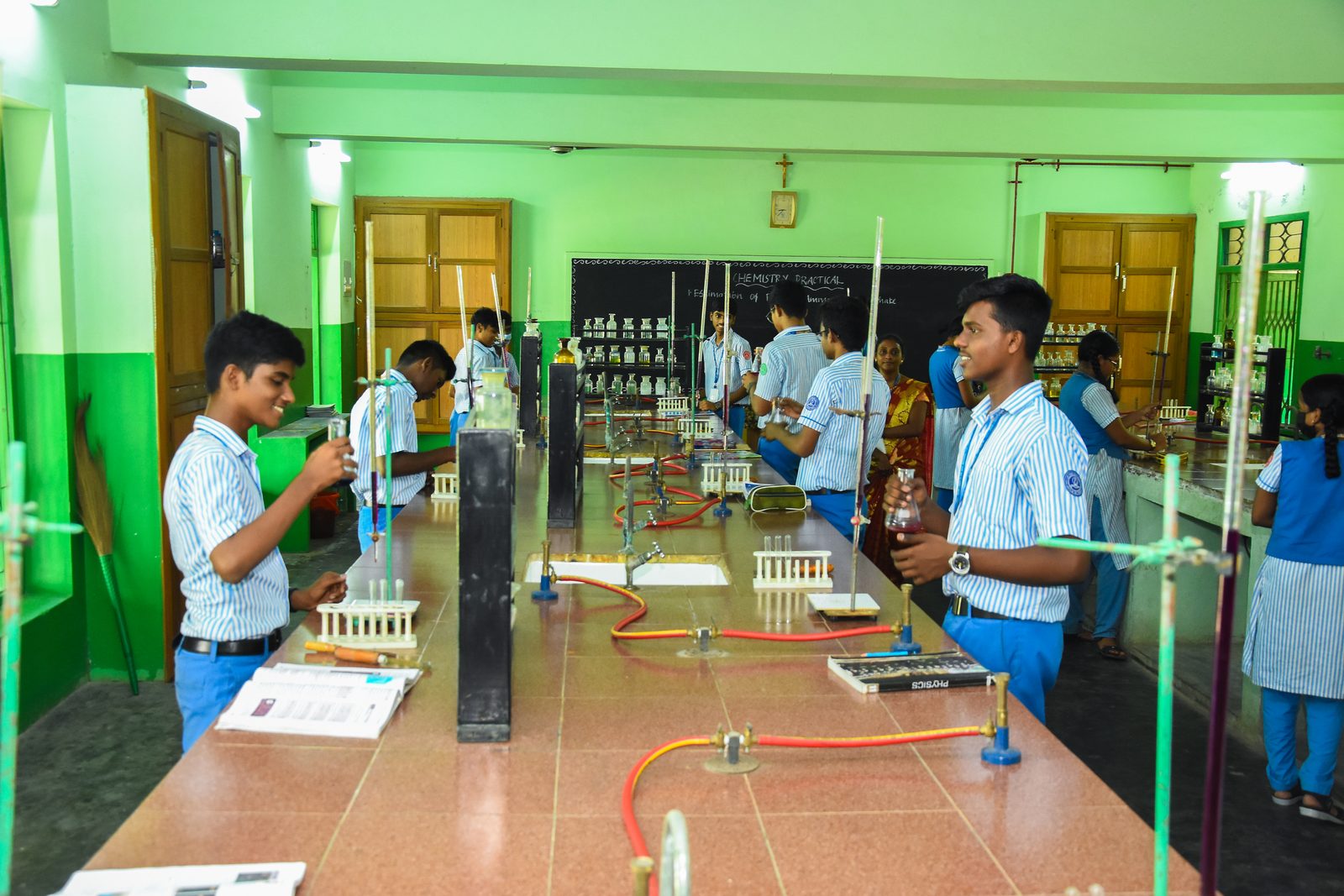
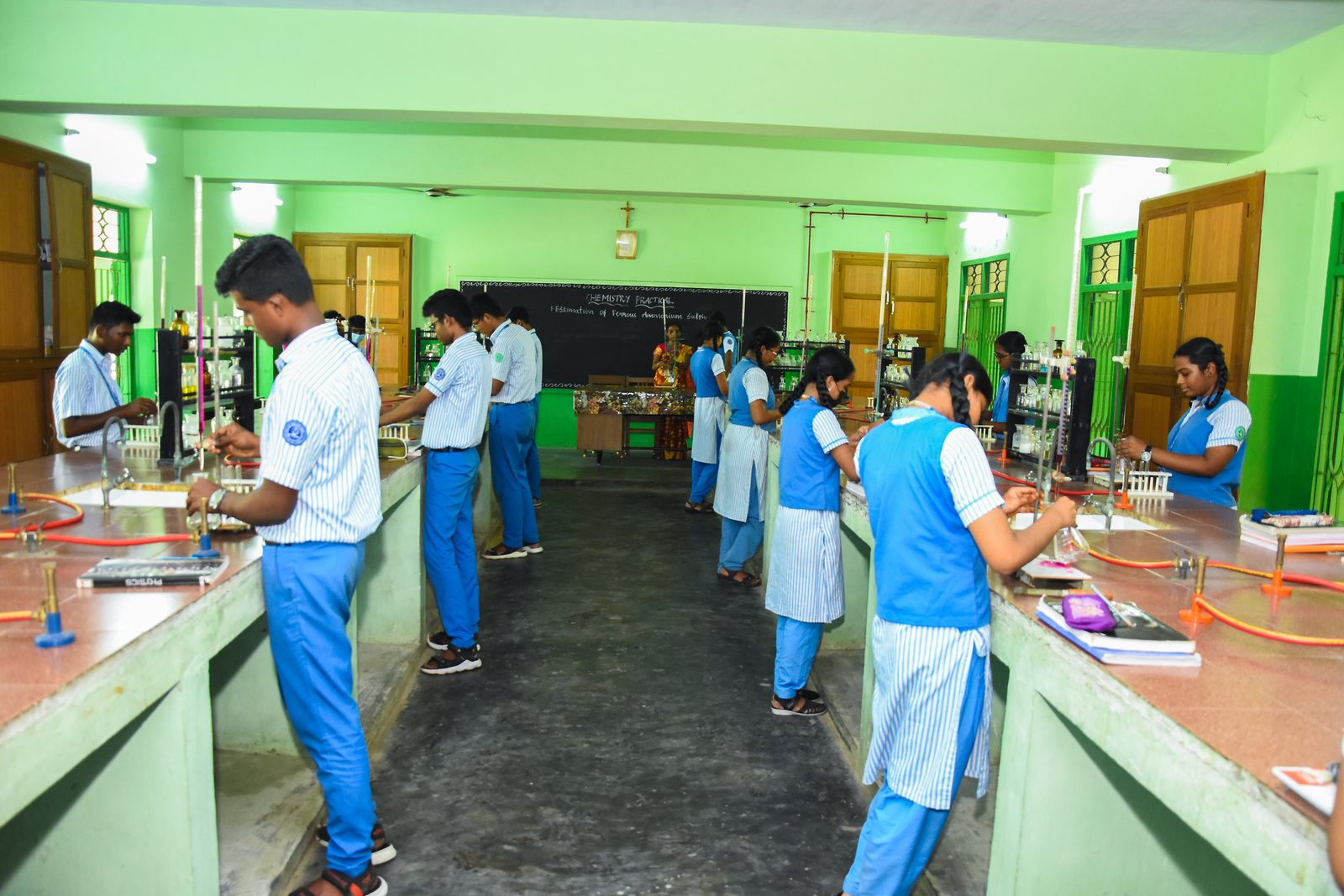
Science begins to separate into Physics, Chemistry and Biology, and students start doing their own practical work at the laboratory bench. Mathematics turns abstract. Social Science widens into history, geography and civics. Discussion and debate become regular.
Secondary — Classes IX and X
Consolidation and preparation for the SSLC public examination. Core subjects are taken seriously and examination technique is taught openly — how to read a question, how to budget time, how to show working. Term examinations are written under board conditions.
Higher Secondary — Classes XI and XII
Students choose a group of subjects and specialise for the Class XII public examination, with laboratory work in the science subjects and structured guidance on what follows school. The groups currently offered are confirmed by the office at the time of admission.
Subjects
What is taught
| Area | Subjects |
|---|---|
| Languages | English, Tamil |
| Mathematics | Arithmetic, Algebra, Geometry, Statistics |
| Sciences | Physics, Chemistry, Biology, Environmental Science |
| Social Science | History, Geography, Civics, Economics |
| Computers | Digital literacy, computer practicals |
| Arts & PE | Art, music and choir, games, yoga |
Assessment
Four levels, only two of which count
The first two exist to inform teaching. The last two exist to record achievement. Confusing them is how schools frighten children.
Formative
Daily, unmarked checks in the classroom. Their whole purpose is to tell the teacher what to do tomorrow.
Periodic
Low-stakes written tests across the term, so that difficulty is found early rather than in March.
Term examinations
Full papers written under proper conditions, reported to parents, and discussed with the student.
Public examinations
The State Board SSLC examination in Class X and the Higher Secondary examination in Class XII.
Method
How we teach
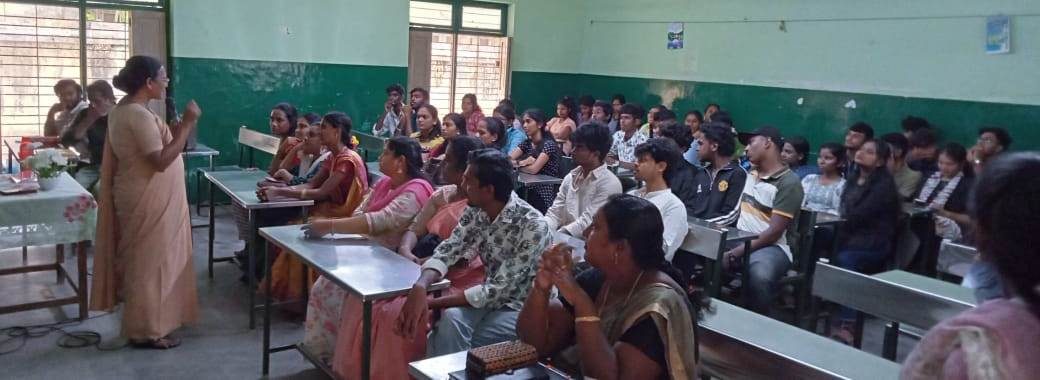
Depth before speed. A teacher who finds that half a class has not followed a concept goes back to it, and no one is made to feel that this is their fault. Coverage that leaves understanding behind is not coverage.
Science is done, not only described. From the middle school upward students handle the apparatus themselves — measuring, titrating, dissecting, observing under the microscope — in three separate laboratories, with goggles and aprons for practicals and chemicals kept under the teacher's control.
Remedial help is ordinary here rather than exceptional. Extra coaching before the public examinations is arranged for students who need it, and parents are told plainly and early when a child is falling behind.
See the laboratoriesQuestions about the syllabus or the groups?
The office will tell you exactly what is offered in each class this year.